

Diet
There are eight species of pangolin worldwide. Four species of pangolin live in Asia and the other four live in Africa, but all eat the same two man foods: ants and termites. They use there nose to find their food and then use their long claws to dig up the nests. Their claws are so long on their front feet that they often walk on just two feet. To catch the insects, the pangolins wriggle their long sticky tongues into the tunnels of the ants and termites. For us humans, our tongues are connected to our mouth, but pangolin tongues start just behind their ribcage.
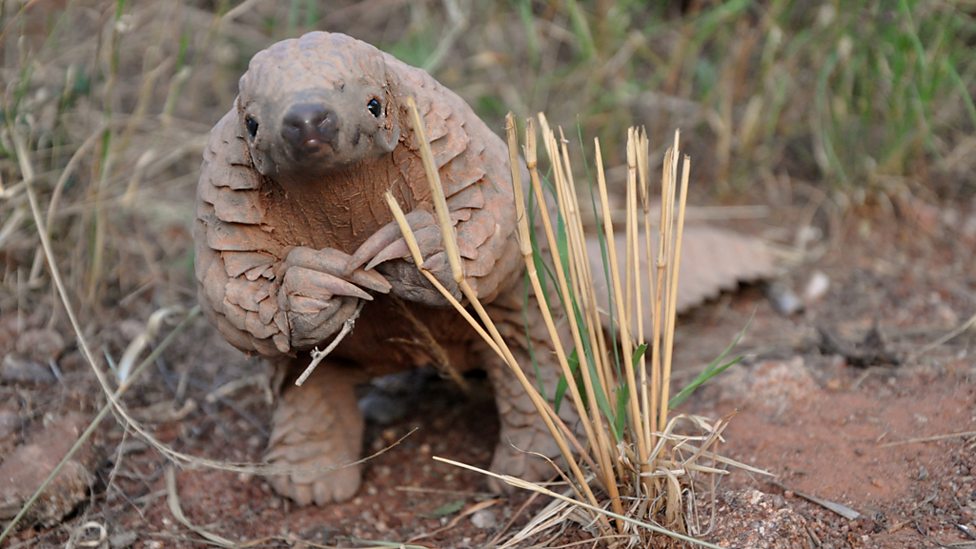
When a pangolin is feeding on ants or termites, it is very vulnerable. To protect itself, the pangolin has evolved to b covered in thick, strong scales. The scales are arranged like roof tiles and when a pangolin curls up, none of the pangolin’s predators can kill it.
Habitat
Pangolins live in all sorts of habitats according to their species. Some live in desert or grasslands while others live in forests or jungles. 5 out of the 8 species of pangolin are arboreal, meaning that they live in trees. So long as there are ants, termites and a decent amount of water, the pangolin can survive.
Life Cycle
Baby pangolins are often called pango pups. When it is born, the pango pup will have small soft scale (around 1000) that will harden over the course of the next 1-2 days.They are born with all the scales thy will ever have. The pups cling to their mother’s tail or back and are cared for by her for 3-4 months. If the baby feels threatened it will curl into a ball, just like an adult would, and the mother will curl herself around the pup. A pangolin can live for up to twenty year and will spend most of their time alone.
Poaching and Trafficking
Pangolins are the single most trafficked animal in the world and it is because of their defence strategy. When a pangolin feels threatened, it will curl into a tight ball. Any other animal would walk away because they can’t break through the strong armour, but a human will simply pick it up. The reason why people poach them is because in some cultures, the scales are believed to be medicinal and even magical. Because of this, poacher get lager sums of money for the scales. Currently, all species of pangolin are listed as endangered. Something has to change if these animals are to survive.
A 9th Species?
In 2023, a quantity of seized pangolin scales had DNA tests done on them and found that the DNA of some of the scales was different to that of every known species of pangolin. No live specimen has ever been seen. For all we know, the species that we just discovered might already be extinct because of the poachers. The species is know as the Asian Mysterious Pangolin.