

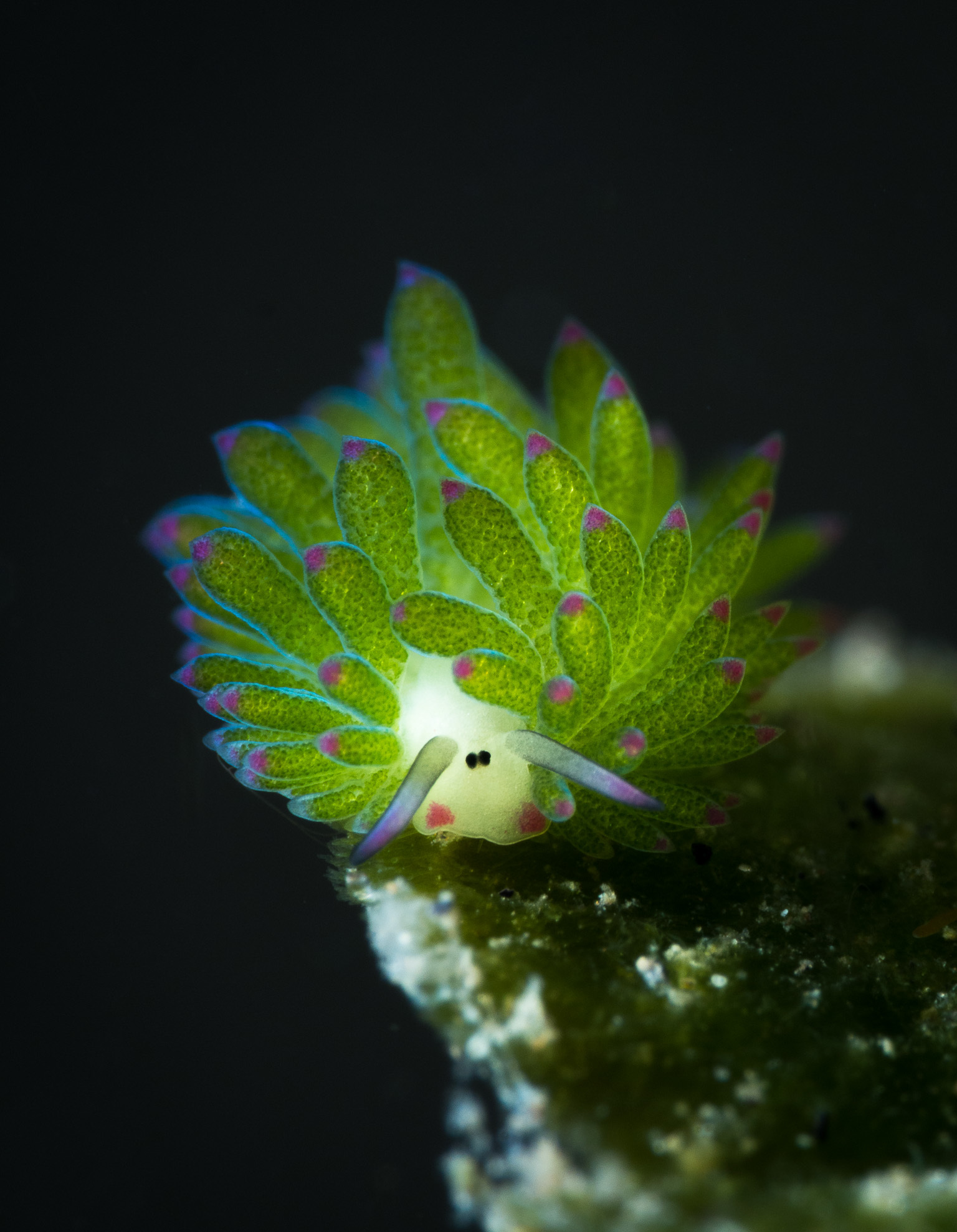
Marine sacoglossan sea slugs are a group of sea slugs with some incredible abilities. There is more to them than what meets the eye. They have remarkable camouflage, can chop off their own head and still live and are the only animal to us photosynthesis. There are around 300 species in this group, the most famous being the leaf sheep slug and the lettuce slug.
Diet
Sacoglossans primarily eat algae, but they don’t eat the whole thing. They use a specialised tongue called the radula to extract the cell sap. But there is another method for getting energy that no other animal uses: photosynthesis. Plants use chloroplasts in order to harness energy from the sun and so do sacoglossans, the only difference is that they steal it from the algae. The chloroplasts stay alive in the slug and produces energy like it would in plants.
Sacoglossans can survive on photosynthesis alone for almost a year. A study was done to prove this. Slugs were given no food and were split into two groups. One group was kept in a well lit environment while the other was kept in darkness. The ones kept in a well lit environment live noticeably longer than those kept in the dark.
Habitat
Sacoglossan sea slugs live in, you guessed it, the sea! In specific, they live in tropical seas (28°C-32°C). Habitats vary from species to species. Some live directly on algae beds, while other live in mangrove forests. They live between 1-25m deep in the water. All true sacoglossans live in saltwater as that is where the alga that they fed upon lived.
Life Cycle
Sacoglossans start off their life as eggs and then hatch into larva called veligers. It takes them 3-4 weeks to go from a newly hatch veliger to a fully grown adult. The slugs can live for 6-12 months depending on the species and health of an individual and grow to be between 1-3cm in length. Throughout the life of certain species of sacoglossan sea slugs, the slugs will willingly decapitate themselves. The slugs are then able to regrow their entire body in just 20 days! A slug will do this when it is young and can decapitate themselves up to 2 times. The only reasons why they can do this is because of the stolen chloroplasts from the algae. The photosynthesis supplies them with energy throughout this process, though scientist still don’t know how the slugs can live without a heart.
Conclusion
Sacoglossan sea slugs are incredible animals with crazy abilities. However, these beautiful animals are vulnerable to habitat loss. Every year, humans dump 12 million metric tons of plastic into the ocean and 1,500 species of sea creatures are currently endangered. We need to help to protect our oceans, otherwise so many species will b gone forever. In the last 50 years, around 15 species of sea creatures have gone extinct. If we work towards a more sustainable future, countless animals will be saved. It is up to you to make the change.